Frequently Asked Questions (FAQ) on Wire-Grid Terahertz Polarizers
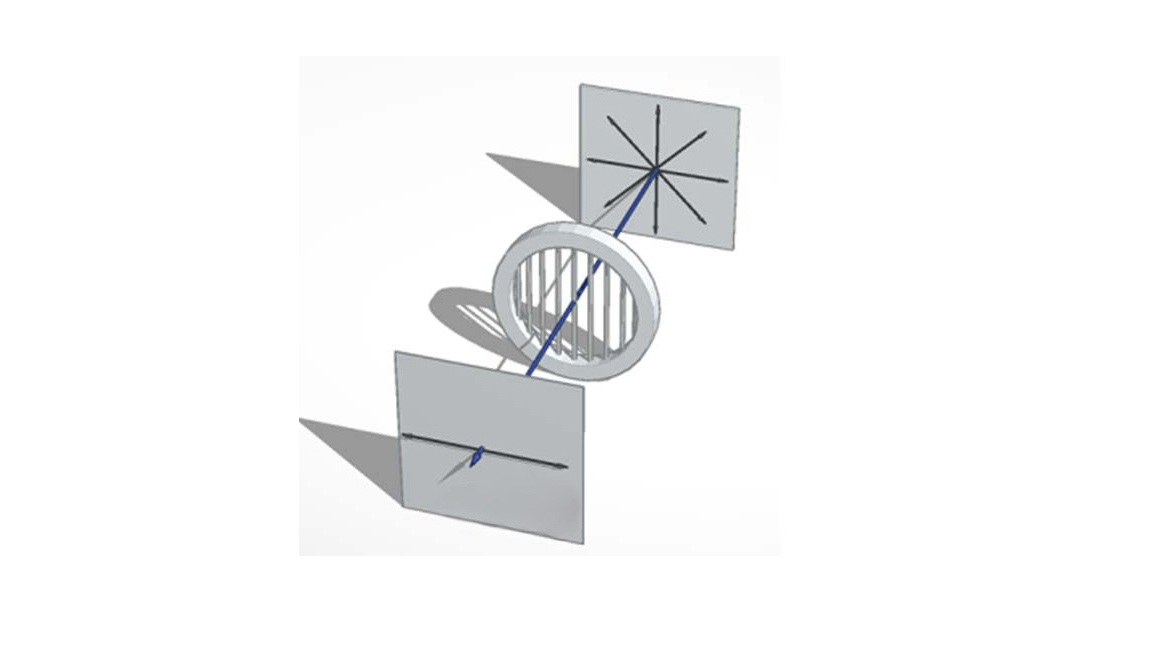
Free-standing wire-grid terahertz polarizers serve as low-loss polarization components for millimeter and sub-millimeter wavelength radiation (e.g., in the far-infrared or terahertz frequency range). Typical applications include their use as linear polarizers for mid-infrared to millimeter-wave terahertz radiation, beam splitters or polarizing interferometers, couplers for long-wavelength radiation, and variable attenuators or variable reflectors. Please note that, as polarization-sensitive elements, they inherently introduce polarization into the system when used as attenuators, reflectors, or couplers.
FAQ on Continuous-Wave Terahertz Antenna Technology
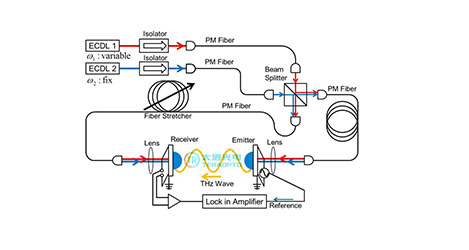
Continuous-wave terahertz (CW-THz) radiation generated via the photoconductive effect can convert the difference-frequency signal of two lasers into a terahertz signal in the electrical domain. The frequency resolution of a CW-THz system is limited only by the laser linewidth. Typical applications of continuous terahertz radiation include high-resolution spectroscopy, imaging, and precise monitoring of specific spectral lines. The terahertz modules developed by the Fraunhofer Heinrich Hertz Institute (HHI) leverage mature optoelectronic communication technologies, enabling terahertz technology to better serve a wide range of industrial applications and environments.
Precautions for Using HHI Fiber-Coupled Photoconductive Antennas
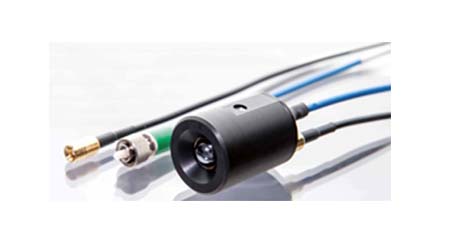
The fiber-coupled photoconductive antennas developed by the Fraunhofer Heinrich Hertz Institute (Fraunhofer HHI) are widely used in commercial terahertz time-domain spectrometers due to their excellent performance. However, compared to conventional single-layer LT-GaAs/InGaAs antennas, these antennas are more susceptible to damage—particularly the emitter side. The following section provides a detailed overview of the operating conditions and precautions for using HHI fiber-coupled photoconductive antennas.
Summary of Experience in Building a Terahertz Time-Domain Spectrometer
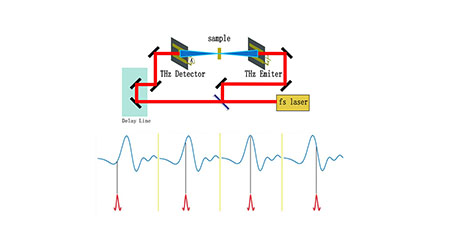
If your laboratory already has a femtosecond laser—whether a femtosecond fiber laser or a Ti:sapphire femtosecond laser, either from an oscillator or an amplifier stage—as long as the pulse width is on the order of 100 fs, you can build a terahertz time-domain spectroscopy (THz-TDS) system at a low cost.
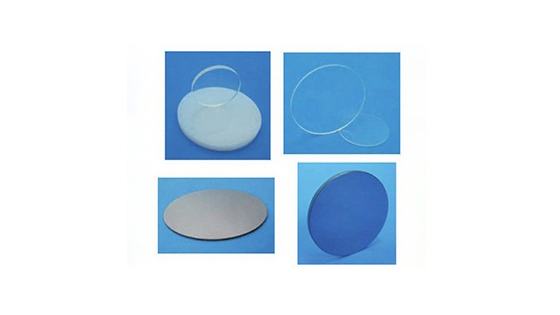
THz_Materials: Guide to Commonly Used Terahertz Materials
Terahertz (THz) waves are electromagnetic radiation in the frequency range of approximately 0.1–10 THz (corresponding to wavelengths of ~3 mm to 30 μm, or wavenumbers of 3–300 cm⁻¹), situated between the microwave and infrared regions of the spectrum. Compared to visible and infrared light, THz waves can penetrate common materials such as skin, plastics, clothing, and paper. Due to their low photon energy, they do not cause the same type of damage as ionizing radiation (e.g., X-rays). These properties make THz radiation suitable for applications in processing (e.g., pharmaceutical manufacturing), quality control, and THz imaging. Currently, there is also significant interest in using THz technology for security screening, package inspection, semiconductor characterization, chemical composition analysis, and biological research.
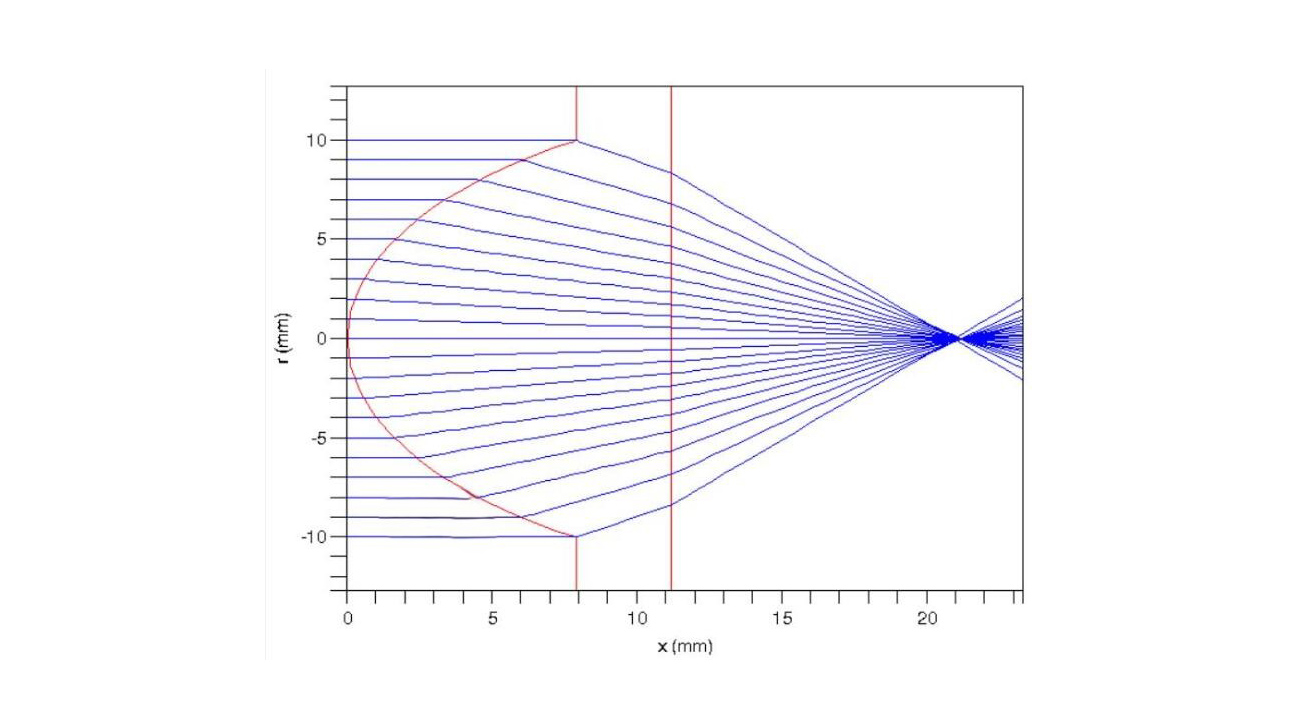
Analysis of the Beam-Focusing Capability of TPX Terahertz Lenses
TPX is the lightest of all known polymers. It is transparent in the ultraviolet, visible, and terahertz (THz) spectral ranges, making it suitable for alignment using a He–Ne laser. The refractive index of TPX is approximately 1.46 and exhibits minimal dispersion across wavelengths. TPX is commonly used to fabricate optical components for the terahertz range, with TPX lenses being among the most widely used. This article primarily investigates the beam-focusing capability of TPX terahertz lenses.