
EN
EN
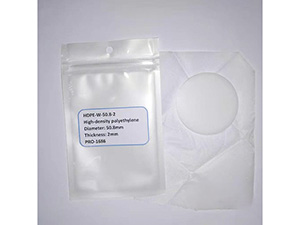
Polyethylene (PE)
PE is a lightweight, elastic crystalline material. It can be heated up to 110 °C and cooled to temperatures ranging from-45 ÷ -120°C. PE exhibits good dielectric properties, corrosion resistance and radiation resistance. However, it is not sufficiently stable under ultraviolet radiation or in oily environments. Biologically, PE is inert and easy‑to‑handle.
At 23 °C, its density is 0.91‑0.925 g/cm3, tensile yield strength 8‑13 MPa, and tensile modulus 118‑350 MPa. Its refractive index is approximately 1.54 over a broad spectral range.
High‑density polyethylene (HDPE) is commonly used as a component material. In addition to thick lenses and optical windows, thin‑film HDPE can be employed as a THz polarizer. We use HDPE for the window of the Golay Cell.
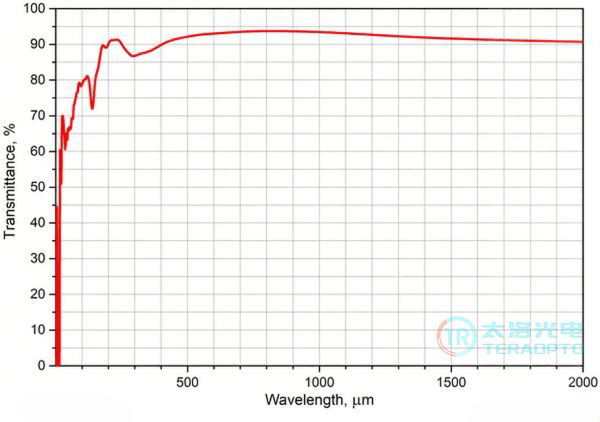
Fig. 1 Transmission of 2 mm-thick HDPE sample. THz region.
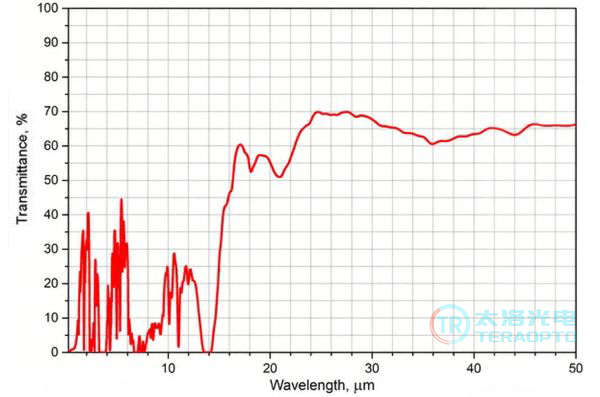
Fig. 2 Transmission of 2 mm-thick HDPE sample. NIR&MIR region.
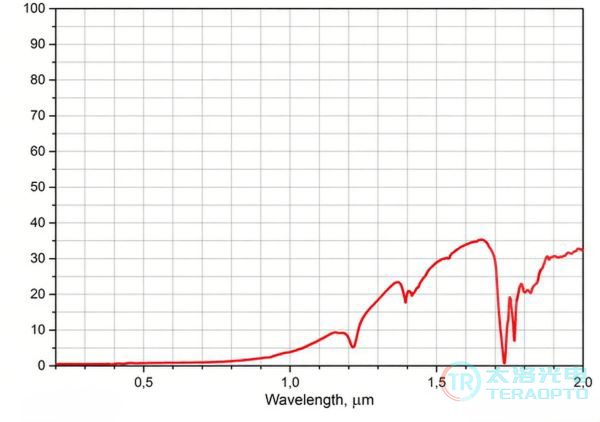
Fig. 3 Transmission of 2 mm-thick HDPE sample. VIS&NIR region.
Unfortunately, HDPE exhibits very low transmittance in the visible‑light region, so it cannot be used as a collimating element in optical systems.
It should also be noted that the THz transmittance of HDPE is temperature‑independent, making it suitable as an optical window for cryostats. Its temperature coefficient of refractive index is 6.2*10-4 K-1 (for the range 8-120 K).
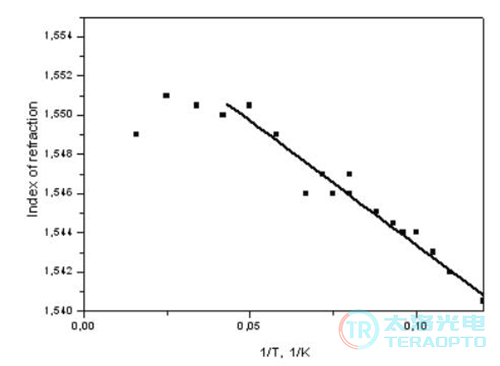
Fig. 4 Temperature dependence of refractive index (***)
For engineering applications, ultra‑high‑molecular‑weight polyethylene (UHMW‑PE) is the preferred choice, as it offers higher durability and a lower friction coefficient compared with HDPE.
Among all grades of polyethylene, ultra‑high‑molecular‑weight PE 1000 (UHMWPE) delivers the best‑balanced performance. This material combines excellent durability and outstanding impact strength, even at cryogenic temperatures. It also features a good combination of stiffness and damping capacity and is easy to weld. It exhibits low water absorption, resistance to most chemicals, and good machinability.
UHMWPE is an excellent alternative to PTFE for applications where the operating temperature does not exceed 60–70 °C.
Typical Properties of UHMWPE :
| Density | 0.93 g/cm3 |
| Water Absorption,% (ISO 62) | <0.01 |
| Tensile Modulus (ISO 527) | 680 Mpa |
| Shore D Hardness (ISO 868) | 63 |
| Abrasion Resistance (vs. mortar) | 80 |
| Melting Temperature | 135 °C |
| Coefficient of Linear Thermal Expansion(DIN 53752), 10-5K-1 | 150-230 |
| Operating Temperature Range (Long‑term) | -250 - +80 °C |
| Operating Temperature Range (Short‑term) | 130 °C |
| Softening Temperature(ISO 306) | 79 °C |
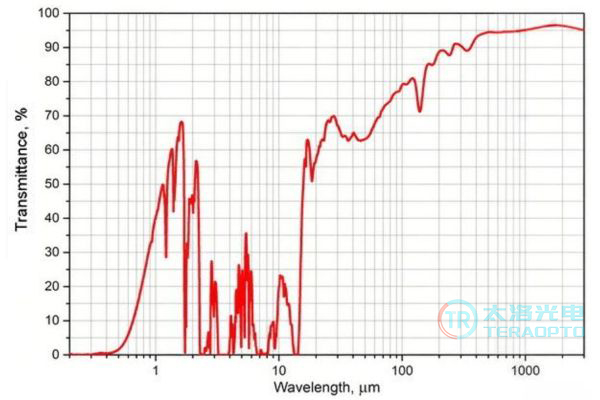
Fig. 5. Transmittance of a 2 mm thick UHMWPE sample.