
EN
EN

UHV viewport with CF flange
Window Material Selection for Our UHV Viewports
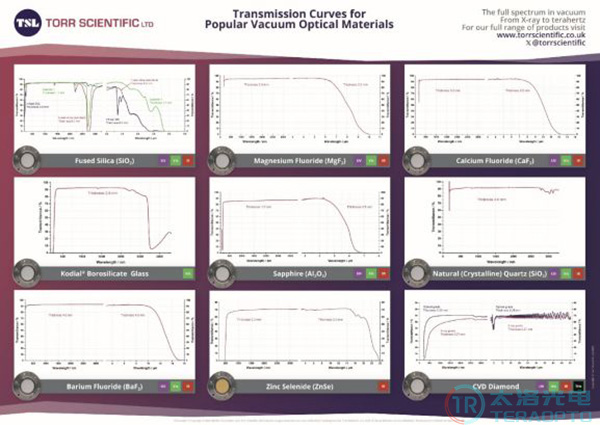
Multiple optical materials are available as standard options. The selection depends on numerous factors, including mounting flange, seal type, optical dimensions, cost, extreme‑temperature conditions and wavelength range. Common examples are listed below; this is not an exhaustive list, and we will consider other materials that may be specified by customers.
(1)The borosilicate(Kodial) glass viewport is optically transparent in the visible‑light range and is used for viewing the interior of vacuum systems. Typical applications may include observing sample transfer, checking whether valves are open or closed, or monitoring processes or active components. Borosilicate viewports are manufactured by edge‑sealing the glass optical element to a metal spun component to create a vacuum‑tight leak‑proof seal, which is then welded to a suitable vacuum flange. Borosilicate glass is also known as 8250 or 7056 glass.
(2)Fused silica exhibits high transmittance in the ultraviolet(UV) spectral range. Its excellent optical properties make it ideal for laser applications that demand precision optical components. The optical element is vacuum‑brazed to various spun‑metal components. Different spun‑metal materials permit the manufacture of low‑magnetic or non‑magnetic viewports. We can also supply high‑performance fused‑silica grades such as Spectrosil®, Infrasil® and HPFS 7980®, together with our standard UV grade.
(3)Sapphirefeatures a broad transmission range from ultraviolet to near‑infrared and can operate reliably at high temperatures. Sapphire is vacuum‑brazed and available in standard, low‑magnetic and non‑magnetic versions.
(4)Natural z‑cut quartz exhibits birefringent properties. The material is cut along the Z‑axis (z‑cut), orienting the crystal’s optical axis perpendicular to the plane. This causes the ordinary and extraordinary rays to travel along the same path through the crystal and preserve the polarization of the light beam. Its transmission range spans 250 nm to 3 μm and 50 μm to 1000 μm+, making it an ideal terahertz material. We supply adhesively‑mounted z‑cut viewports, as this material cannot withstand the high temperatures (>490 °C) associated with vacuum brazing.
Zinc Selenide(ZnSe) delivers high transmittance across the infrared range. ZnSe is one of the preferred materials for optics operating at the 10.6 μm wavelength in CO2 lasers. Anti‑reflection coatings are also available upon request.
Magnesium Fluoride(MgF2) transmits in the ultraviolet and near‑infrared ranges and is commonly used for excimer‑laser applications. As standard, we supply this material in C‑cut (optical‑axis‑perpendicular orientation) to achieve minimal birefringence.
Calcium Fluoride(CaF2) transmits in the ultraviolet and near‑infrared ranges and is used for excimer‑laser applications.
Barium Fluoride(BaF2) transmits across both the ultraviolet and near‑infrared ranges. It exhibits slightly better performance than CaF2 in the infrared, while its ultraviolet performance is somewhat inferior. Typical applications include thermal imaging (non‑contact temperature measurement) and thermal spectroscopy.
Lithium Fluoride(LiF) has a transmission range from 150 nm to 6 μm and features a low refractive index within the 150 nm‑200 nm spectral band. It is a commonly‑used material for thermal imaging (non‑contact temperature measurement).
CVD diamond is an ultimate optical material transmitting from the ultraviolet to the far‑infrared, making it an excellent candidate for terahertz applications. We supply both optical‑grade and X‑ray‑grade versions of this material; the two grades differ in transmittance across the ultraviolet and visible‑light ranges.
Zinc Sulfide(ZnS) is an excellent infrared material, particularly within the 8 μm to 14 μm range. It is also a tough material, enabling it to withstand harsh environments. It must not be heated above 250 °C.
KRS5(thallium bromo‑iodide) possesses deep‑infrared characteristics and a high refractive index. It is widely utilized for spectroscopic applications. As it is non‑hygroscopic, it is used for liquid‑cell windows in FTIR spectroscopy and acts as a suitable alternative to other hygroscopic optical materials. The downside is that this material is regarded as toxic, requiring careful handling and storage. The material also undergoes cold‑flow over time; therefore, regular inspection is required.
Germanium(Ge) exhibits reasonably good transmittance between 2 μm and 14 μm, making it suitable for thermal imaging and metrology applications. Its high refractive index (4 at 11 μm) results in high intrinsic reflectivity, so it can be used as a beamsplitter without special coatings. Components such as ATR (Attenuated Total Reflection) heads for infrared spectrometers are commonly fabricated from germanium. It can also be applied for electromagnetic shielding.
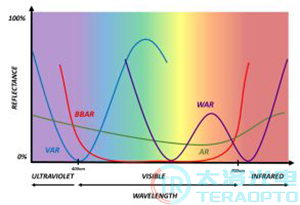
Coated Viewport Options from Torr Scientific
Indium tin oxide(ITO) – a thin conductive coating typically applied to the vacuum‑side surface of optical elements to reduce static‑charge build‑up. It may also be deposited on the atmospheric side of optics to act as a microwave‑blocking layer.
Anti‑Reflection (AR) Coating – single‑layer QWOT coating material applied on both sides of the window, optimized for the customer‑specified wavelength range.
Broad‑Band (BBAR) Anti‑Reflection Coating—a four‑layer coating applied to both sides of the optical element,optimized for the customer‑specified laser wavelength range.
VAR Anti‑Reflection Coating—a two‑layer coating applied to both sides of the optical element,optimized for the customer‑specified laser wavelength.
WAR Anti‑Reflection Coating—a four‑layer coating applied to both sides of the optical element,optimized for the customer‑specified laser wavelength.
SPAR Anti‑Reflection Coating—a multi‑layer coating applied to both sides of the optical element,optimized for the customer‑specified laser wavelength. This may cover multiple target wavelengths or offer an extremely broad wavelength coverage.